Art & Craft
When Culture Takes Shape in the Hands of the Pahadi People
In the quiet corners of Uttarakhand’s mountains, you’ll hear the soft rhythm of weaving, see fingers carving life into wood, and witness stories told through threads, colors, and clay. The art and craft of Uttarakhand are not just decorative — they are deep expressions of heritage, devotion, sustainability, and survival.
For generations, artisans of Garhwal and Kumaon have created pieces of beauty that are both functional and sacred. At Pahadi Parivartan, we believe that these crafts are not relics of the past — they are living traditions, carrying forward the wisdom of the hills while providing livelihoods and pride to the local people.
This page is a tribute to the creative spirit of Uttarakhand, to the artisans who work with nature, and to a culture that continues to speak through its crafts.
Aipan Art: Sacred Geometry of Devotion
Ringaal Weaving: Bamboo That Breathes Purpose
Wool and Handloom Weaving: Warmth That Wraps History
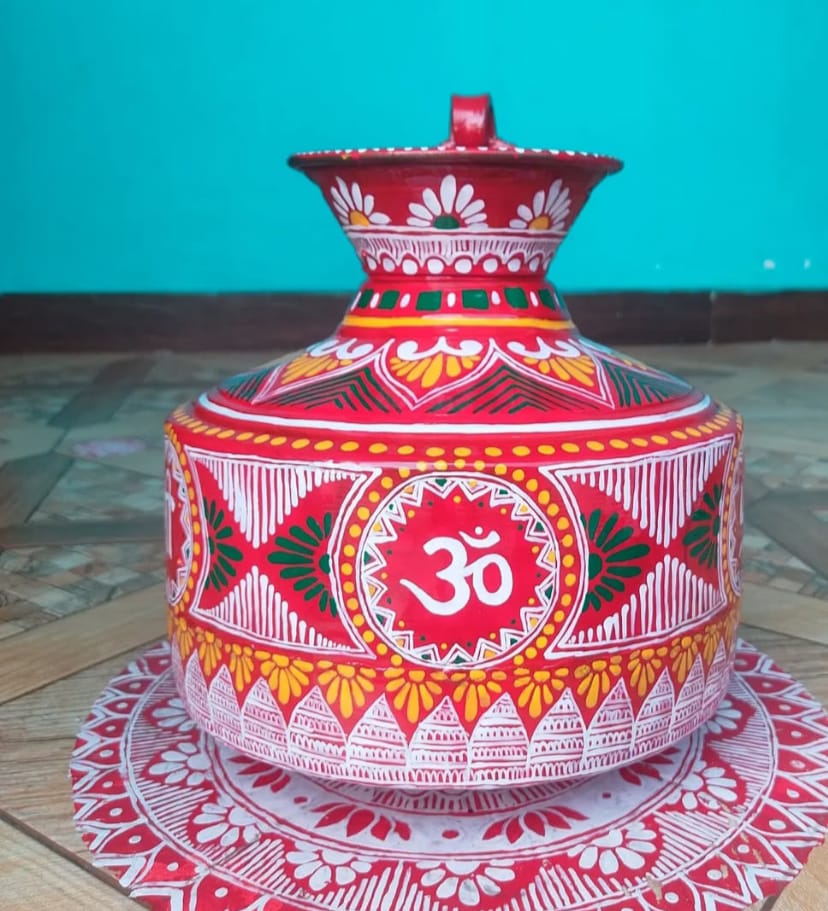
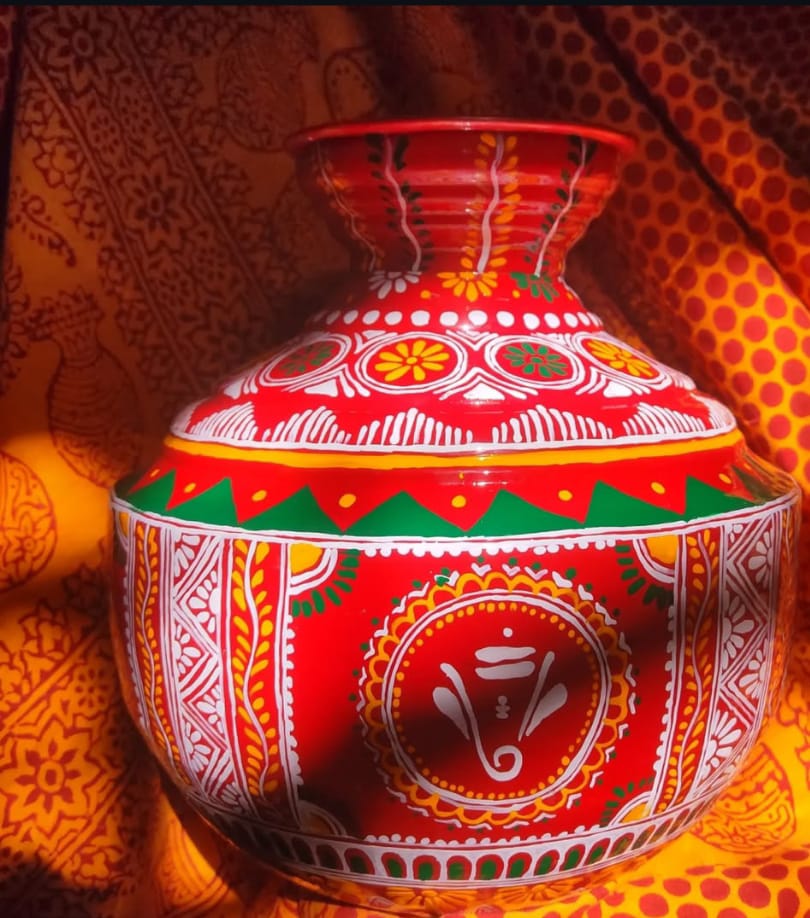
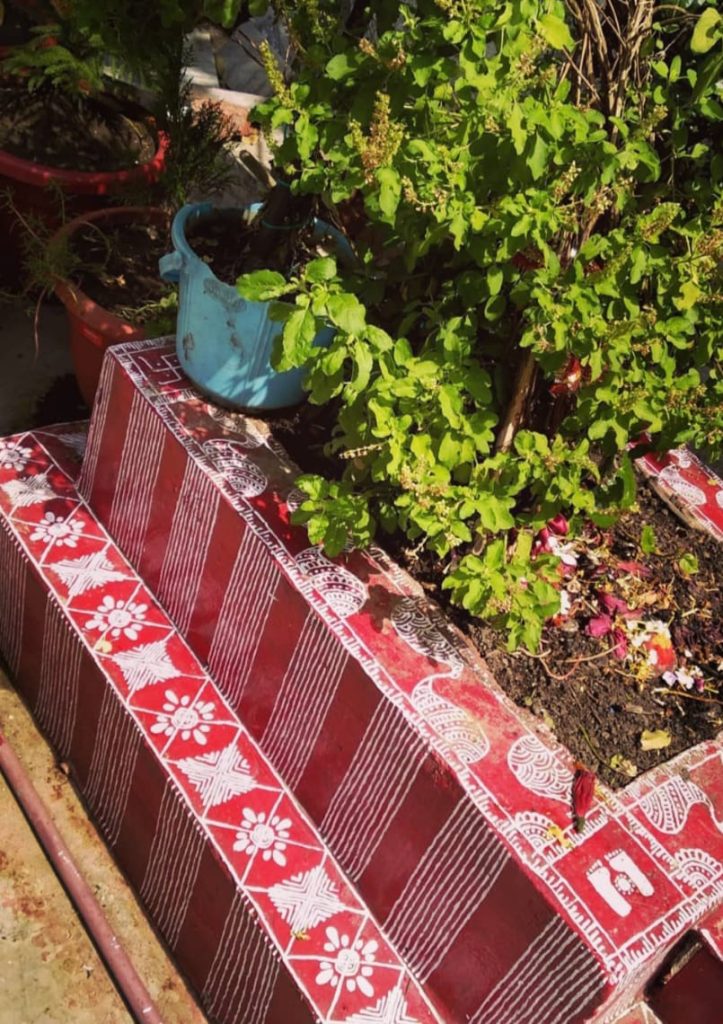
One of the most iconic art forms of Uttarakhand, especially in Kumaon, is Aipan — intricate ritualistic designs made using a paste of rice flour on red mud walls, floors, and paper.
Significance:Created during festivals, religious ceremonies, and life milestones such as weddings or naming ceremonies.
Designs often feature lotus patterns, footprints of deities, swastikas, peacocks, and symbols that invite prosperity and ward off negativity.
Traditionally drawn by women, the art also represents empowerment and connection with the divine.
Today, Aipan is being revived in notebooks, tote bags, wall hangings, and even fashion — merging ancient tradition with modern aesthetics.
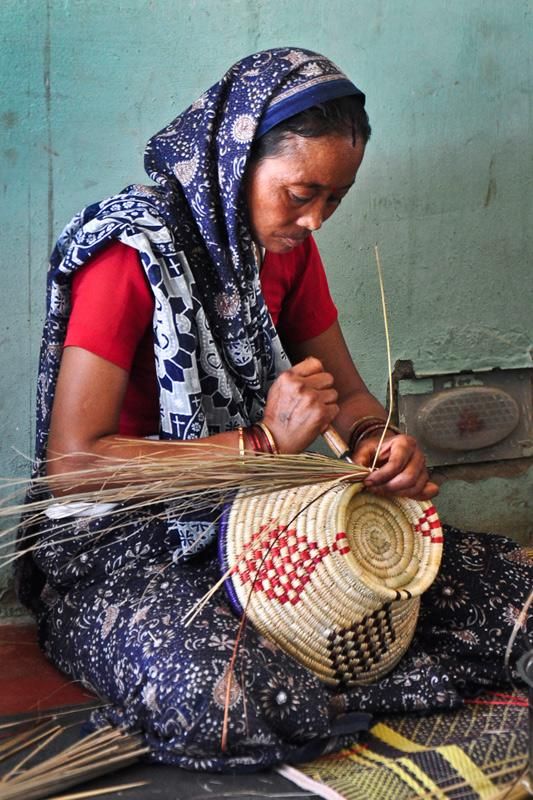
In the highlands and forested regions of Uttarakhand, artisans weave magic out of Ringaal, a type of mountain bamboo.
What They Create:Baskets, storage boxes, fishing traps, stools, trays, and even cradles.Items are often used in daily life — for storing grains, carrying vegetables, or religious offerings.
Cultural Relevance:Ringaal weaving is eco-friendly, sustainable, and durable.
Passed down orally from parent to child, often within tribal and marginalized communities.Once a symbol of status in homes, these items are now finding a place in eco-conscious urban markets.
Pahadi Parivartan aims to bring such natural crafts to light — not just as products but as carriers of climate wisdom.
With long winters and mountainous terrain, wool weaving is both a craft and a necessity in Uttarakhand.
Craft Process:Women spin sheep wool into yarn, which is dyed using natural ingredients like walnut, turmeric, or local leaves.These yarns are woven into shawls, mufflers, coats, blankets (dan), and pankhi (light wool shawls) on traditional looms.
Local Handlooms:Lohi and Patti fabrics of Chamoli and Almora are well-known for their softness and insulation.
Products are often decorated with simple stripes or geometric patterns, reflecting mountain minimalism.
Handloom cooperatives have become a source of financial independence for women and a powerful link between tradition and economic development
4. Wood Carving: Sculpting Devotion into Timber
Temples, doors, and homes across Uttarakhand showcase stunning examples of traditional wood carving — an art form that merges aesthetics with spirituality.
Notable Uses:
Temple doors, windows, pillars, and ceilings.
Wooden homes with carved floral, mythological, and geometric motifs.
Traditional wooden temples like Jageshwar and Baijnath are visual masterpieces of this heritage.
Wood Types Used:Mainly Deodar (Himalayan cedar) and Walnut wood, known for their durability and fragrance.
Wood carving also includes the making of wooden utensils, idols of deities, and decorative panels, now being introduced into urban interior décor markets.

Copper and Brass Craft: Echoes of Metal in Ritual and Routine
Stone Carving and Sculpture: The Silent Art of Strength
The ancient Thatheras (metal artisans) of Uttarakhand are known for crafting everyday objects with copper and brass — materials considered sacred in local tradition.
Common Products:Lotas (water pots), diyas (lamps), thalis (plates), and kalash (ritual vessels).
Used extensively in daily prayers, festivals, weddings, and temple offerings.
Each handcrafted piece carries slight imperfections — and it is in those imperfections that the character of the artisan shines. Metal craft, though declining, still exists in small workshops in Haridwar, Almora, and Ranikhet, supported by slow commerce and temple patronage.
Uttarakhand’s hilly regions are rich in soapstone, granite, and other soft rocks, which are used to craft statues of deities, temple motifs, and household artifacts.
Cultural Importance:
Pithoragarh and Bageshwar are known centers of stone craftsmanship.
Artisans carve Shiva lingams, Ganesha idols, and village deities for rural temples.Stones are also carved into tools, utensils, and even grave markers.
The tradition, like many, is under threat from industrialization — but with renewed interest in temple art, many young artisans are returning to the trade.
Pottery and Clay Work: From Soil to Sacred
Though not as widely practiced as in plains, Kumaoni and Jaunsari villages have seasonal potters who create:
Clay diyas, water pots, kulhads, and ritual items.
Terracotta figurines used in local temples.
Clay objects are both decorative and symbolic — created with care and dried naturally in the sun. In many villages, potters are honored during festivals and fairs, reflecting their important place in social life.
Modern Adaptations and Artisan Empowerment
10. Women in Craft: Keepers of Heritage
Festivals and Craft Fairs: Showcasing the Artistic Soul
In recent years, a new wave of designers, NGOs, and conscious consumers are working to revive traditional crafts and give them modern meaning.
Emerging Trends:
Aipan on home décor and apparel.Ringaal baskets in eco-tourism homestays.
Woolen products sold as winter fashion in cities like Dehradun and Nainital.Wood-carved items used in boutique hotels and cafes.
This is not just about style — it’s about creating jobs, pride, and intergenerational transfer of skills.
Most of Uttarakhand’s traditional crafts — Aipan, weaving, embroidery — are nurtured and passed down by women. In small village homes, between tending fields and children, women continue to create.
Through self-help groups, rural cooperatives, and government schemes, women are now turning craft into entrepreneurship. They are not only preserving tradition but also becoming community leaders.
Many seasonal melas and fairs provide platforms for local artists to showcase their craft.
Notable Events:
Uttarakhand Handicraft Mela (Dehradun)
Nanda Devi Mahotsav (Almora)
Phool Dei Festival Stalls
Local village haats organized by NGOs and SHGs
These fairs not only help in economic support but also allow young generations to experience the diversity of Pahadi craftsmanship.

Pahadi Parivartan’s Vision for Craft Revival
We at Pahadi Parivartan are committed to:
Creating online marketplaces for artisans.
Organizing workshops and skill training for youth.
Collaborating with designers to modernize traditional designs.
Documenting craft stories, artisan interviews, and photo essays.
Crafts are more than just products — they are the soul of a community, and we believe every household that owns a Pahadi piece is carrying a piece of Uttarakhand in their hands.
Every Stitch, Every Carving Tells a Story
The art and craft of Uttarakhand are not simply creative pursuits — they are expressions of love, history, nature, and identity. They carry the warmth of the people, the wisdom of the past, and the hope for the future.
By honoring and supporting these traditions, we are not just preserving heritage — we are building livelihoods, restoring pride, and writing a new chapter for the people of the hills.
Come, explore, and support Uttarakhand’s living artistry — because every stitch, every carving, every basket carries the story of a Pahadi heart.